

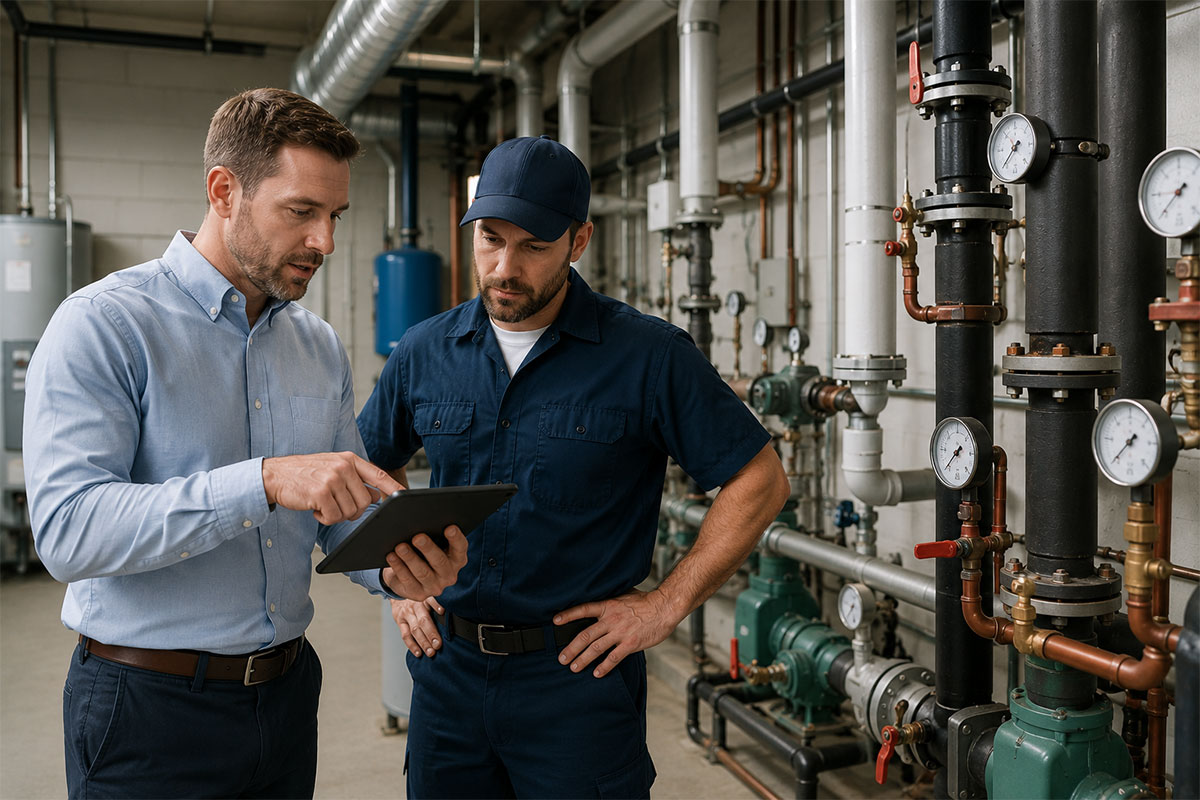
Commercial plumbing systems support the daily operations of offices, retail spaces, apartment buildings, restaurants, and other busy properties. Because these systems often experience heavier use than residential plumbing, small issues can quickly develop into costly repairs, water damage, or disruptions for tenants and customers. A consistent maintenance routine helps property managers identify problems early and keep essential plumbing equipment operating reliably.
Begin by inspecting visible pipes, faucets, toilets, and fixtures for leaks, corrosion, loose connections, or unusual wear. Even a slow drip can waste significant amounts of water over time and may indicate a developing problem. Water stains, damp cabinets, musty odors, or unexplained increases in utility bills may also point to hidden leaks.
Drains should be checked regularly for slow flow, unpleasant odors, or recurring backups. High-use kitchens, restrooms, and utility areas may require scheduled drain cleaning to prevent grease, soap residue, debris, and other materials from restricting the plumbing system.
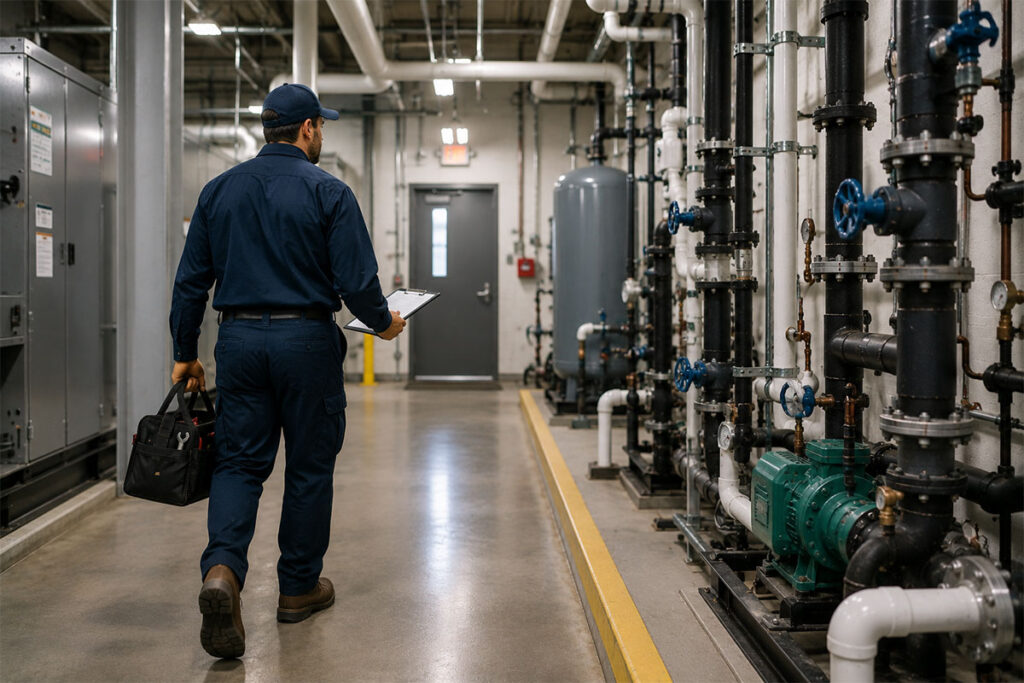
Preventive plumbing maintenance gives property managers the opportunity to address small issues before they disrupt operations. Routine inspections, accurate service records, and timely repairs can reduce emergency calls, control long-term costs, and help commercial plumbing systems perform more reliably.
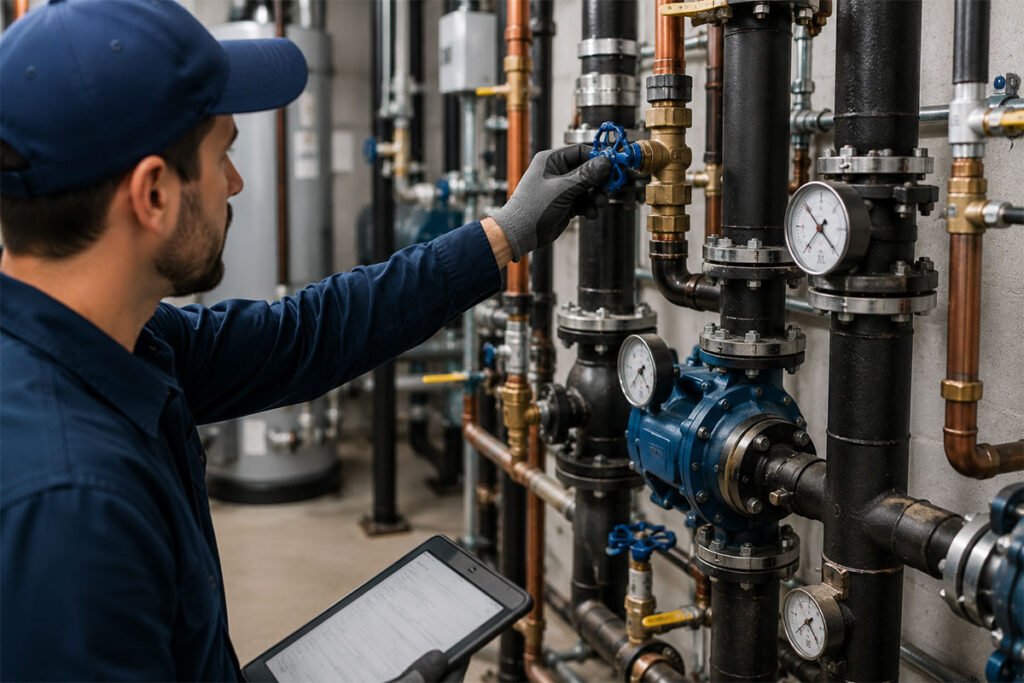
Inspect toilets and urinals for continuous running, weak flushing, damaged seals, and loose components. Faucets, shutoff valves, and accessible supply lines should also be tested to confirm they operate correctly and can be used quickly during an emergency.
Water heaters and other plumbing equipment should be serviced according to the manufacturer’s recommendations. Check for corrosion, leaks, unusual noises, temperature inconsistencies, and signs of reduced efficiency. Backflow prevention devices, sump pumps, grease interceptors, and other property-specific systems may also require scheduled inspections or testing.
Finally, maintain detailed records of inspections, repairs, equipment ages, and recurring concerns. A documented maintenance schedule makes it easier to plan upgrades, manage budgets, and identify patterns before they become larger problems. Partnering with a qualified commercial plumber can help keep the property safe, efficient, and prepared for long-term use.